.jpg)
MEDICAL DISCLAIMER: This article is for general education only — not medical advice, diagnosis, or treatment. Always consult a qualified healthcare professional about your symptoms. Jan Bugar is a massage therapist, not a doctor, physiotherapist, osteopath, or chiropractor, and does not diagnose or treat medical conditions.
URGENT — GO TO A&E OR CALL 999 IF YOU HAVE:
These may indicate cauda equina syndrome — a medical emergency. Do not book a massage. Go to A&E.
See your GP promptly if you have: unexplained weight loss, pain worse at night, a history of cancer, or sciatica lasting more than six weeks without improvement.
Sciatica generates a lot of conflicting advice. Some websites promise massage is as effective as anti-inflammatory medication. The honest answer is more nuanced — and for a condition that is, in a small number of cases, a medical emergency, nuance genuinely matters. This post covers what sciatica is, what the research says, and when massage is and is not appropriate.
Sciatica is not a diagnosis — it is a symptom: pain that radiates along the path of the sciatic nerve, typically from the lower back through the buttock and down one leg, sometimes as far as the foot. It is caused by compression or irritation of the sciatic nerve or its nerve roots, and the cause matters enormously for treatment.
Common causes include a herniated lumbar disc, spinal stenosis (more common in older adults), piriformis-related nerve irritation (genuinely debated — prevalence estimates vary widely), and rarely, tumour or infection.
Muscle tightness alone does not compress the sciatic nerve in most cases. Massage can address tension in the surrounding muscles, but it cannot alter disc position, canal dimensions, or structural nerve compression.
The 2015 Cochrane review (Furlan et al., CD001929 — 25 RCTs, 3,096 participants) concluded: "We have very little confidence that massage is an effective treatment for LBP." Benefits versus inactive controls were short-term only. NICE NG59 recommends manual therapy only "as part of a treatment package including exercise" — never standalone.
A 2014 study (Majchrzycki et al., n=59) compared deep tissue massage alone versus massage plus NSAIDs for chronic low back pain — not sciatica — and found no benefit from adding the anti-inflammatory. This is sometimes misread as "massage beats medication." It does not show that.
The honest summary: massage may offer modest, short-term relief for the muscular component of sciatica presentations. It does not treat structural causes.
Muscle tension relief. When sciatica pain causes protective guarding — the surrounding muscles tightening in response to pain — deep tissue work on the glutes, piriformis, hamstrings, and lumbar muscles may ease that secondary tension. This is the most defensible benefit, and many clients report genuine short-term comfort.
Reduced pain sensitivity. Sustained manual pressure activates descending pain-inhibition pathways, which may temporarily reduce how intensely pain signals are perceived. This is a neurological effect, not a structural one.
Improved movement confidence. People in pain often move less, which can worsen deconditioning and stiffness. Feeling temporarily more comfortable after a session may support engagement with the exercise and movement that NICE recommends as primary care.
Stress reduction. Chronic pain is stressful. The parasympathetic response from therapeutic touch is well-supported and genuinely relevant for people managing a long-term pain condition.
It cannot fix structural causes. A herniated disc, bone spur, or narrowed spinal canal is not altered by soft-tissue work. If nerve compression is structural, massage addresses symptoms but not the source.
It is not appropriate for all presentations. Active nerve inflammation, acute disc herniation, significant neurological deficit (weakness, numbness, loss of reflexes), and any red-flag symptom are all contraindications. A responsible therapist will always ask about your symptoms and refer on when needed.
The evidence is modest. Short-term relief at best, according to the highest-quality reviews. Anyone promising a cure — or suggesting massage is equivalent to medical care — is not being straight with you.
Deep pressure is not always better. "Deep" does not mean "more effective." For acute or nerve-related pain, lighter techniques may be more appropriate. A good therapist adapts pressure to what your body needs on the day, not to a fixed idea of what deep tissue means.
Massage is most appropriate when sciatica is longstanding rather than acute; neurological symptoms are absent or mild and stable; you have already had a medical assessment; and muscle tension is contributing to your symptoms.
In West Sussex, residents can self-refer to Sussex MSK community physiotherapy for problems lasting more than six weeks — no GP referral needed. NHS physiotherapy is free, though waiting times vary. Private massage can be a reasonable adjunct during that wait, not a replacement for assessment.
Before any hands-on work, I take a thorough case history — asking specifically about neurological symptoms, red flags, and prior medical assessment. If your history suggests you need medical input first, I will tell you and refer you on.
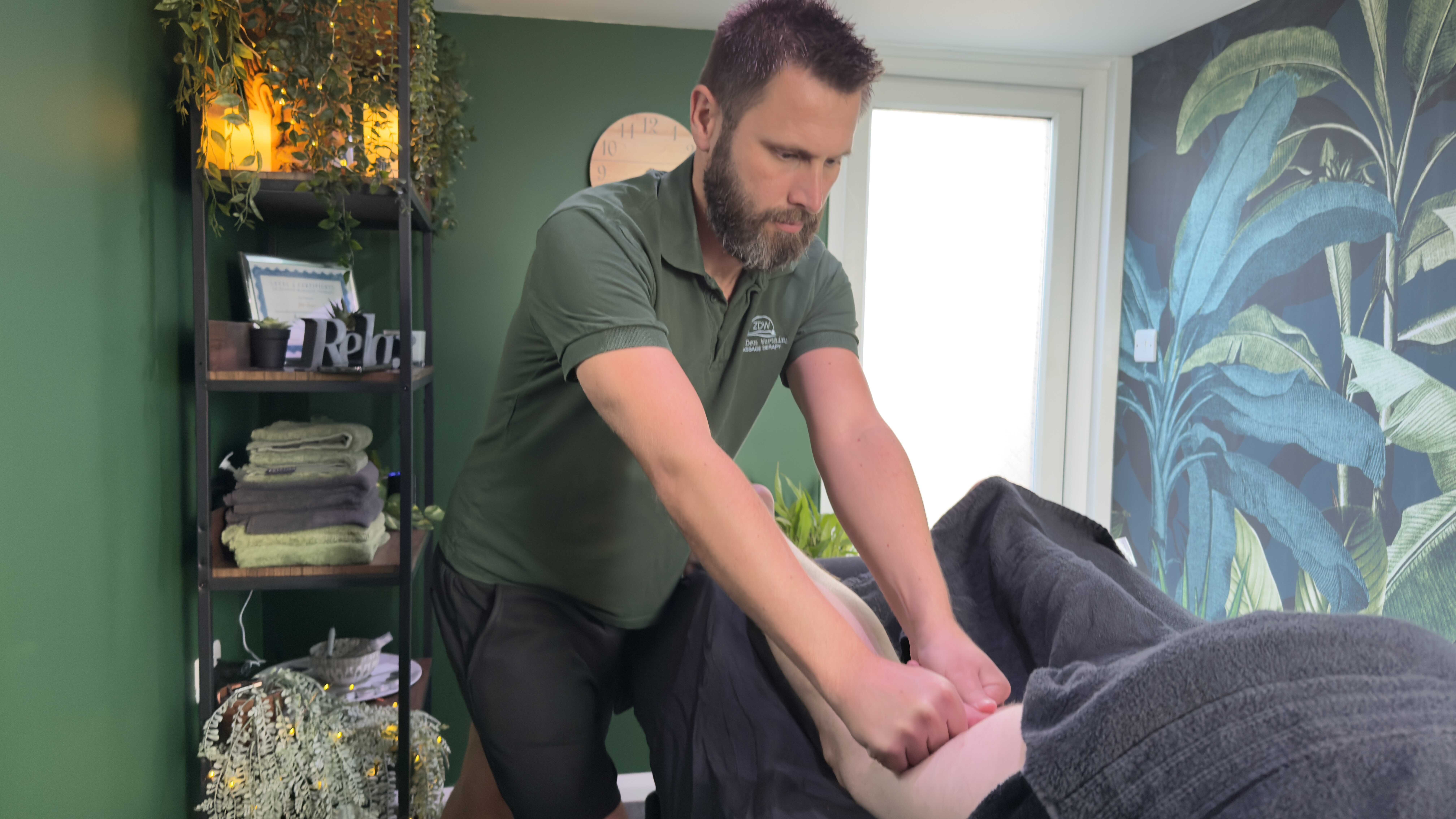
Where massage is appropriate, a session typically covers the lumbar muscles, glutes, piriformis, and hamstrings using slow, sustained pressure. One session rarely resolves sciatica; realistic expectations matter.
Can deep tissue massage make sciatica worse? Yes, in some cases. Aggressive pressure on an acutely inflamed nerve, or working through a contraindicated presentation, can aggravate symptoms. This is why a thorough case history before any hands-on work is non-negotiable, and why you should always tell your therapist if something feels wrong during a session.
How many sessions will I need? There is no honest answer to this without knowing your history. Some people notice short-term relief from one or two sessions; others see gradual improvement over several weeks; for structural causes, massage may provide comfort but will not resolve the underlying problem. I would rather tell you this upfront than imply a fixed course of treatment will fix you.
Should I see a doctor before booking a massage for sciatica? If your symptoms are new, severe, or include any of the red flags listed at the top of this article — yes, see a doctor first. If you have longstanding, stable low-back/leg pain and have already been assessed, massage is more straightforward to consider.
How much does a session cost at Zen Den Worthing? Deep tissue massage: 30 min £30, 60 min £60, 90 min £80. Sessions are one-to-one, in a calm private setting in Durrington, Worthing.
Deep tissue massage is not a treatment for sciatica — it is a supportive tool that may ease muscular tension and pain sensitivity in appropriate presentations, alongside proper medical care. The evidence is modest and short-term. The red flags are real and must come first.
What I can offer is honest, careful hands-on work, a thorough intake process, and a straightforward conversation about whether massage is right for you — including referring you elsewhere when it is not. If that sounds like what you are looking for, you are welcome to book a consultation.
